
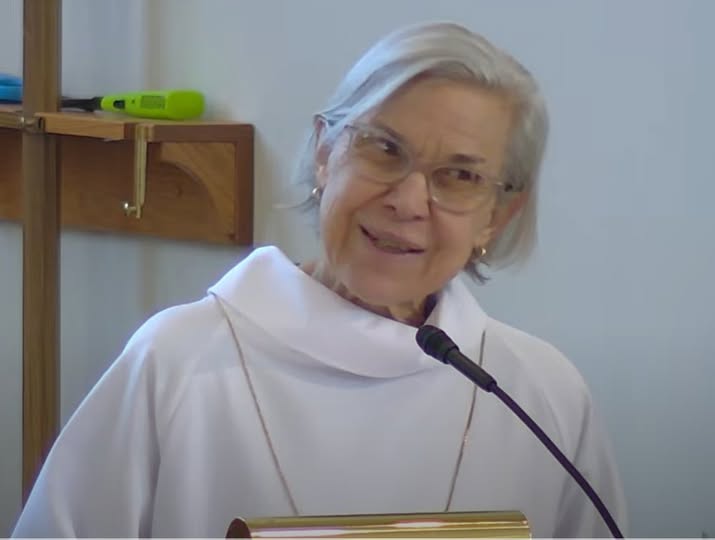
The First Sunday of Advent-Year A
Sunday, November 30, 2025
Regina Berens
Isaiah 2:1-5, Psalm 122, Romans 13:11-14, Matthew 24:36-44
In the name of the Father, and of the Son, and of the Holy Spirit. Amen.
I could preach an entire sermon on the history of people predicting the date of the end times. Wikipedia lists 25 different predictions that have NOT happened, starting with one by 3 Christian theologians in the year 500, and including some by John Wesley, Jeane Dixon, Joseph Smith (who founded the Mormons), Jehovah’s Witnesses, Hal Lindsay (who wrote “The Late, Great Planet Earth”) and the Reverend Jerry Falwell. A few names show up a second time after they “refined” their original predictions.
And Isaac Newton says it will happen in the year 2060.
The multiple sayings of Jesus about the Second Coming seem to conflict with each other.
in today’s Gospel, Jesus says, “But about that day and hour no one knows, neither the angels of heaven, nor the Son, but only the Father.
Yet, earlier. in Matthew 16:28, he makes the statement, “Truly I tell you, there are some standing here who will not taste death before they see the Son of Man coming in his kingdom.” One interpretation of the “will not taste death” phrase supported by many is that, while people may experience physical death of the body, they won’t experience the punishment of true death until the Last Judgment.
In Matthew 24:34, just two verses before today’s reading, Jesus says, “This generation will not pass away till all these things have taken place”. Charles Spurgeon, a renowned 19th-Century English preacher, dismisses many of the explanations of the “this generation” passage, concluding that the phrase “this generation” doesn’t refer to a group of people alive at a particular time but the specific group of non-believers.
The truth is, we don’t know when the Second Coming will happen. Jesus doesn’t even know.
Only God the Father knows. (Just in case you needed some scripture to REALLY make it hard to figure out the structure of the Trinity.)
Jesus’ statement about the signs that the End of the Age might be coming, and what will happen when it does, is followed by three parables that have the same message: Be prepared.
The first is the parable of the wise slave who takes over the household while the master is away. The master, on returning, finds everything running like clockwork. Jesus contrasts this with the dire fate of the slave who doesn’t expect the master to come home on time, mistreats his fellow slaves and “eats and drinks with drunkards”.
The second is the story of the five wise bridesmaids and the five foolish ones, who didn’t bring extra oil for their lamps.
The third is the parable of the talents, in which the servant who buried his money in the ground is “thrown into the outer darkness” when the master arrives and finds that he was unproductive.
Even though the secular world is beginning the season of reveling and drunkenness, In his letter to the Romans, Paul doesn’t offer any advice or prognostications about the second coming but he warns us, “Let us then lay aside the works of darkness and put on the armor of light; let us live honorably as in the day, not in reveling and drunkenness, not in debauchery and licentiousness, not in quarreling and jealousy. Instead, put on the Lord Jesus Christ, and make no provision for the flesh, to gratify its desires”.
Over 300 years ago, Matthew Henry’s commentary on this passage contrasts being asleep and being alert and awake.
“The night is far spent and the day is at hand; it is time to dress ourselves…What we must put off: our night-clothes, which it is a shame to be abroad in: Cast off the works of darkness”. I like to think that if Matthew Henry had written AFTER England colonized India and the Hindu word “pajamas” entered the English vocabulary, he would have told us that being prepared meant not meeting God, figuratively, in our pajamas.
While no one can tell us when Jesus will return, there’s one thing those of us on earth already know.
To quote Jim Morrison of The Doors- “No one here gets out alive”.
The same warnings in Paul’s Letter to the Romans, Jesus’ words in the Gospel of Matthew and the parables that follow remind us that we need to be prepared for death, too- living as each day on earth might be our last.
What does that mean?
Put on Christ.
John MacArthur, a Baptist preacher who died just this past July, has some beautiful words about what it means to put on Christ.
“If you put on a heart of compassion, that’s putting on Christ, He had that heart. If you put on kindness, that’s putting on Christ. If you put on humility, that’s putting on Christ. If you put on gentleness, patience, bearing with one another, forgiving one another, that’s putting on Christ because that’s just what the Lord did. He says that. And if you put on love, that’s putting on Christ. Those are all the components of righteousness, yes, the righteousness of Christ.”
We need to put on Christ every day.
And be prepared. Every day.
Amen.